The Walled Garden Before the Flower Border
The walled garden shows how enclosure shaped shelter, space, and views, helping you read the structure beneath a garden’s planting.
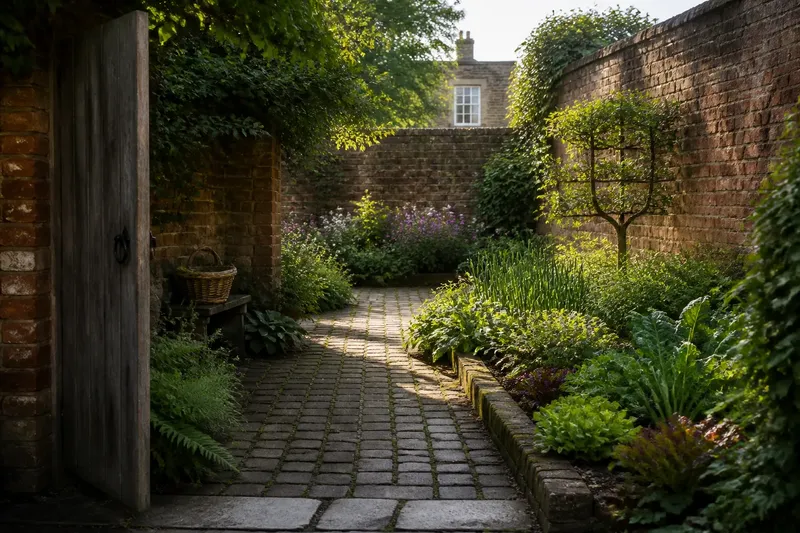
A walled garden makes its boundaries felt before its flowers come into view. The wall sets a horizon at close range, screens what lies beyond, and gives the space inside a distinct character. To understand the walled garden before the flower border, look first at what enclosure does: it organizes shelter, movement, and sight.
Why did walls shape gardens before borders did?
Planting is changeable. A bed can be replanted, a shrub can be pruned, and an empty patch can later take on a new role. A wall, by contrast, establishes a durable outline. It determines where a garden begins, how far the eye can travel, and which outside views disappear.
That distinction matters when reading garden history. In many enclosed gardens, walls served practical purposes alongside visual ones. They could help protect crops and fruit from wind or wandering animals, provide a sheltered place for work, and separate cultivated ground from surrounding land. Their appearance was not merely a decorative frame added to an already finished garden.
Enclosure also changed the experience of moving through a garden. A gate or opening could make entry feel like a transition. A corner could conceal the next space. A wall’s long surface could guide a path or stop the eye at a small courtyard. These effects remain legible even when the original beds and uses have vanished.
How can you read a wall’s work in the space?
Begin by noticing the boundary as a design element, not just a backdrop. Walk the perimeter if you can, then return to the entrance and look inward. The same wall may feel protective from one side and enclosing from another. Its height, texture, openings, and relationship to the ground all affect that reading.
- Trace the outline. Is the garden a simple rectangle, an irregular enclosure, or a sequence of joined spaces? The shape suggests how tightly the garden is held together.
- Find the openings. A gate, arch, or gap directs movement and frames a view. Notice what it reveals and what it keeps out of sight.
- Read the corners. A square corner can make a space feel orderly, while a hidden turn can create a sense of discovery. Check whether paths expose corners or lead around them.
- Look for changes in wall fabric. Brick, stone, plaster, and repaired sections carry different visual weight. A rough surface may seem grounded; a pale, smooth surface can feel lighter.
- Watch the boundary’s effect on light. Walls cast shade and can make a sunny opening feel especially bright. The pattern shifts as the sun moves, so a single visit offers only one view.
These observations help separate a wall’s structural role from its decorative one. A boundary might be plain yet strongly shape the experience, or richly detailed yet sit quietly behind the garden’s main routes. Neither quality alone tells you whether the enclosure works well; the question is how its parts relate.
What does enclosure do to shelter, space, and view?
Shelter is the most immediate effect. A wall can interrupt wind, create a warmer-feeling pocket, or offer a calmer place for tending plants. It can also create shade, so the sheltered side may suit different plants and activities from the open side. A wall’s influence is local: a protected corner does not make every part of a garden feel the same.
Space is shaped by the boundary even when it does not physically shrink the ground. A wall close to a path may make that route feel narrow; a taller boundary at the far end can make a modest space feel contained and complete. Conversely, an opening aligned with a long view can make the garden seem to extend beyond its enclosure.
Views are edited by walls. They can hide a service area, interrupt a distracting backdrop, or hold attention on a tree, doorway, or patch of sky. A framed view feels different from an uninterrupted panorama because the boundary tells the eye where to pause. That pause need not point to a grand feature: a glimpse of leaves above a wall can be enough to suggest the wider landscape.
How might an invented garden change under this reading?
Imagine Mara has inherited a small, enclosed kitchen garden with a brick boundary, a narrow gate, and tired planting pressed against every wall. From the entrance, the beds merge into a busy ring of foliage. The middle looks unused, but the wall’s shape and the gate’s direction already define a strong space.
Instead of treating the wall as a background for more flowers, Mara first watches how she enters and where the view stops. She notices that the gate opens toward a shaded corner, while a stretch of sunlit brick sits opposite. A high window beyond the wall appears above the sunny section, offering a small glimpse of life outside the garden.
She clears a modest sightline from the gate toward that glimpse, leaving the boundary itself untouched. She also gives the shaded corner a clear purpose as a place to set a basket, and reduces the visual crowding against the sunlit wall. The expected result is not a larger garden in physical terms: it is a space whose entrance, pause, and outward-looking view are easier to understand.
The lesson is to work with the enclosure’s existing cues. Mara did not need to turn the wall into a feature or fill the center with a focal object. She allowed the boundary to organize a sequence: entry, sheltered pause, then a view that slips beyond the garden. That is a historical way of thinking about enclosure translated into a present-day design decision.
How can you distinguish a garden wall from a mere backdrop?
A backdrop sits behind activity; an enclosing wall helps determine what the activity can be and how the garden is perceived. Ask whether the boundary affects the route, the light, the sense of privacy, or the way one space meets another. If it does, it is part of the composition, even if its surface is unadorned.
Also consider how the wall relates to planting. A vine-covered boundary may soften its outline, while clipped shrubs can echo its firmness. But planting need not conceal the wall to make the space feel finished. The contrast between a hard edge and loose foliage can make both more legible.
For a historic garden, avoid assuming that every wall was built for the same reason or that its present appearance preserves its original use. Look instead for visible clues: openings, changes in material, sheltered working areas, and the relationship between enclosure and paths. If the wall’s construction or status needs a precise historical interpretation, consult a qualified local heritage specialist rather than treating a visual impression as proof.
What questions help you read a walled garden?
Does a garden wall always make a space feel smaller?
No. A close boundary can make a garden feel intimate, while a carefully placed opening or a view above the wall can extend it perceptually. The effect depends on what the wall hides, frames, and directs the eye toward.
Why do some enclosed gardens feel sheltered but not dark?
Openings, wall height, orientation, and the placement of paths all affect how light enters. A wall can screen wind while leaving a bright entrance or sunlit section exposed.
What should you notice at a garden entrance?
Look at the direction the gate opens, the first view it offers, and whether it reveals the whole space at once. An entrance can make a garden feel welcoming, compressed, or quietly unfolding without changing its footprint.
Can planting replace the role of a boundary wall?
Hedges and screens can create privacy and soften views, but they do not always provide the same sense of permanence or shelter as masonry. The right choice depends on the garden’s purpose, local conditions, and the character you want at its edge.
What can the enclosure teach you before you plant?
Read the wall before deciding what the beds should say. Note where it protects, where it shades, where it narrows a route, and where it opens a view beyond the garden. Those observations reveal the space’s existing structure and may prevent planting from obscuring its strongest qualities.
The walled garden before the flower border was not an empty stage waiting for decoration. Its enclosure already shaped how people entered, worked, rested, and looked outward. When you read a walled garden this way, the boundary becomes more than a limit: it is the quiet framework that gives the changing garden within a sense of place.