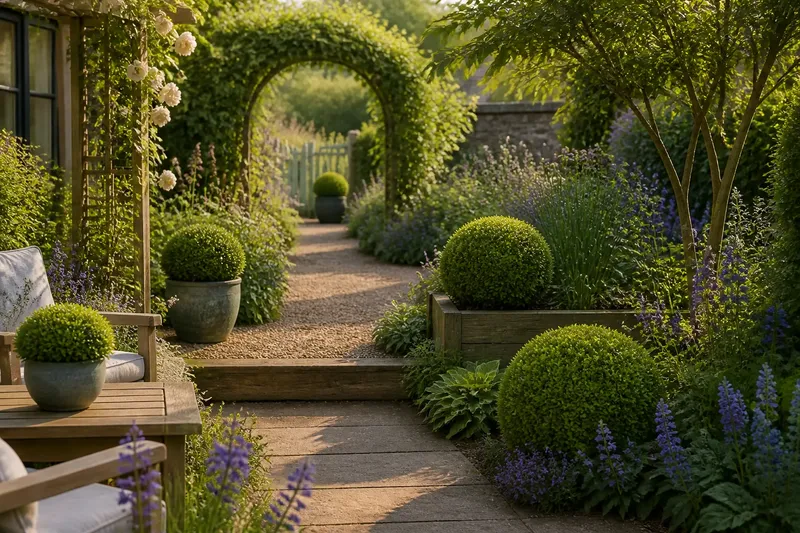
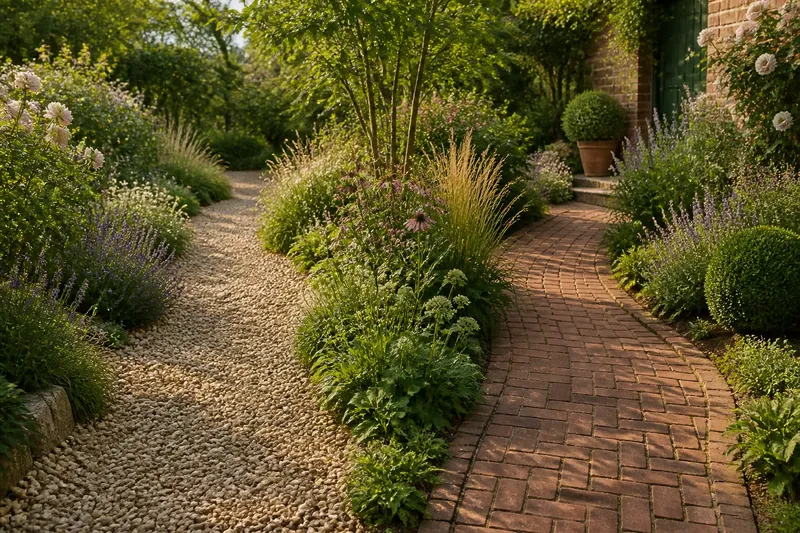
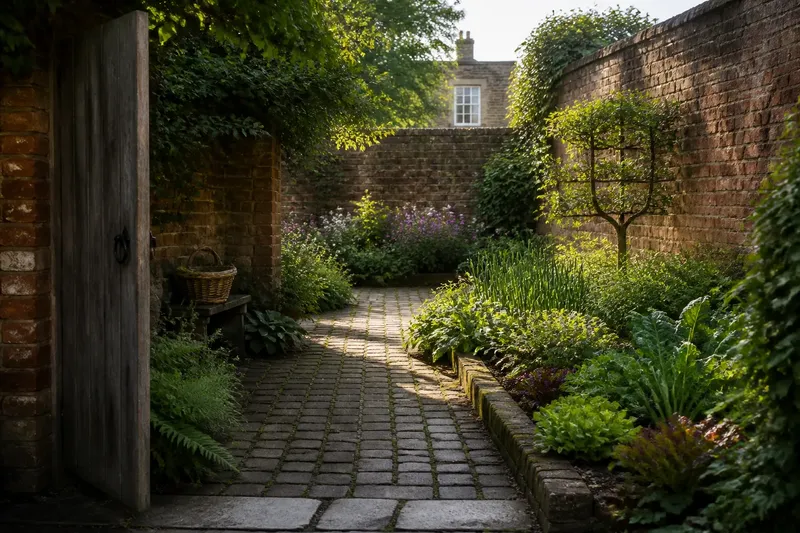
The Focal-Point Myth: A Garden Can Have More Than One Centre
Garden focal points can share a small space without competing. Learn to assess each view, balance strong features, and choose what to adjust.
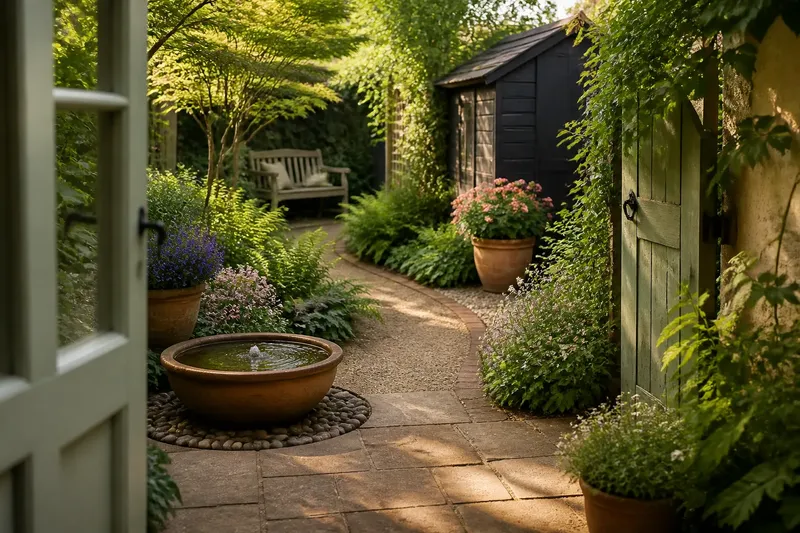
Garden focal points can share a small space without competing if each one has a clear job in a particular view. A bright pot might catch the eye from the kitchen window, while a textured gate matters only once you reach the path. Neither has to lead every view.
What makes a feature a focal point?
A focal point is whatever stands out from a particular place. It could be a stone basin, a clipped shrub, a pale wall or an opening onto a planted corner. Its role depends on contrast, framing and the viewer’s position, not simply its size.
That means a single object can be prominent from the back door and almost disappear from the patio. It also means a garden can have several focal points without arranging them in a sequence. Each can serve a different view: one gives a window a clear subject, another anchors a seating area, and a third makes a plain boundary more interesting.
How can you assess focal points from different views?
Choose the places where you actually look at the garden: a kitchen window, the back step, a bench or the start of a path. At each spot, note which feature draws your eye first, what else remains visible, and whether the view has a quiet area as well as a strong accent.
Check the view in both directions if you use a path. A feature that looks balanced on the way toward a shed may seem crowded when you turn back toward the house. A phone photo can help you compare the framed views without relying on memory.
- If a feature is the only strong accent in the view, keep it as the main focal point; if another object competes beside it, soften or move that object.
- If a focal point blocks a doorway, path or useful sightline, reposition it; if moving it is impractical, reduce its contrast with quieter surroundings.
- If several accents appear crowded in one phone photo, separate their viewing angles or mute one; if the view still feels busy, remove an accent from that frame.
- If a feature disappears from the place where you want to enjoy it, adjust its position or framing; if it works from another spot, let that become its intended view.
- If the return view looks awkward, rotate or shift the feature; if the reverse angle is rarely used, compose the primary view and keep the route clear.
- If a seasonal plant loses its visual presence, rely on a nearby persistent form or texture; if no other feature holds the view, revise the planting around that area.
Say you have a narrow side garden with a back door, a bend in the path and a shed. Imagine the door view shows a terracotta bowl and a bright flowering pot almost on top of each other, while the bend offers a clear view of a fern corner. First, take a photo from the door and note that the bowl and pot compete. Next, move the pot beside the shed, where it can be enjoyed from the bend, and leave the fern corner visible beyond it. Then check the route from both ends: if the path stays open and each feature has a distinct view, keep the arrangement; if the pot still crowds the shed view, turn it toward the seating area instead. The resulting tradeoff is a quieter entrance view in exchange for a more deliberate pause near the bend.
How much contrast should each feature have?
Contrast helps a focal point register, but several high-contrast features in one view can flatten their differences: everything shouts at once. Contrast can come from shape, texture, color or light. A round leaf against fine grasses, a pale pot against dark foliage, or a gap in a solid hedge can each make a feature distinct.
Choose the kind of contrast that suits the view. If a sculpture already has a bold outline, surrounding it with similarly strong shapes may make its edges harder to read. If a seating area needs a clear subject, a simple shift in leaf texture may be enough; you do not need to add another bright ornament.
When is one feature too dominant?
A focal point may be too dominant if it repeatedly pulls your gaze away from a place you want to enjoy, sits in the way of movement, or overwhelms quieter planting. Color can command attention as readily as size: a vivid flower against subdued foliage may draw the eye more sharply than a larger neutral object.
Try a small adjustment before replacing anything. Shift a pot out of the center of a window view, use foliage to soften its outline, or turn a bench toward a calmer part of the garden. Then look again from the same position. If the feature still takes over, reduce its contrast or move it farther from the main sightline.
How do seasons and light affect garden focal points?
A flowering plant can be a strong focal point for part of the year, then lose its color and shape. A gate, textured wall, stone or distinctive branch may remain visually present through changing seasons. Consider what holds the view when flowers fade, without expecting every feature to stand out all year.
Light also changes what looks prominent. A pale wall may catch the afternoon sun, while dark foliage can read more clearly against it at another time. Look from the house and from the garden at the times you commonly use each space. If a feature only dominates in one brief lighting condition, decide whether that moment matters enough to shape the view around it.
What should you know about garden focal points?
Can a focal point be a view rather than an object?
Yes. A framed patch of sky, an opening through a gate or a glimpse of a planted corner can hold attention. Keep the edges of the view clear so its shape is easy to read.
Does every focal point need to be visible from the entrance?
No. A feature can serve a window, a bench or a turn in the path instead. Decide which position it is meant to enrich, then judge it from there.
What if one centerpiece already dominates the garden?
Keep it if it suits the space, and avoid placing another strong accent in the same view. A quieter feature, such as a distinctive leaf shape or a change in paving, can make a separate corner feel considered without challenging the centerpiece.
How can you tell whether a view feels crowded?
Stand in the spot you want to assess and identify the first feature your eye lands on. If several bold shapes or colors compete at once, soften, shift or remove one and check the view again.
Give each view its own focal point
Garden focal points work best when they suit the view they occupy, not when every corner tries to become the centerpiece. A useful next move is to take a phone photo from the back door and another from the place you sit, then decide whether each view needs a stronger accent, more breathing room or no change at all.
Keep those viewing positions in mind when you choose a new pot, plant or ornament. The most helpful addition may be the one that makes a particular view clearer; the best choice may also be to leave a view alone.